
.
Representations of Deligne-Mostow lattices into
.
On the general dyadic grids on ${\mathbb {R}}^d$
Adjacent dyadic systems are pivotal in analysis and related fields to study continuous objects via collections of dyadic ones. In our prior work (joint with Jiang, Olson, and Wei), we describe precise necessary and sufficient conditions for two dyadic systems on the real line to be adjacent. Here, we extend this work to all dimensions, which turns out to have many surprising difficulties due to the fact that  , not
, not  , grids is the optimal number in an adjacent dyadic system in
  . As a byproduct, we show that a collection of
  dyadic systems in
  is adjacent if and only if the projection of any two of them onto any coordinate axis are adjacent on
  . The underlying geometric structures that arise in this higher-dimensional generalization are interesting objects themselves, ripe for future study; these lead us to a compact, geometric description of our main result. We describe these structures, along with what adjacent dyadic (and n-adic, for any n) systems look like, from a variety of contexts, relating them to previous work, as well as illustrating a specific exa.
Two problems on random analytic functions in Fock spaces
Let  be an entire function on the complex plane, and let
  be its randomization induced by a standard sequence
  of independent Bernoulli, Steinhaus, or Gaussian random variables. In this paper, we characterize those functions
  such that
  is almost surely in the Fock space
  for any
 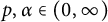 . Then such a characterization, together with embedding theorems which are of independent interests, is used to obtain a Littlewood-type theorem, also known as regularity improvement under randomization within the scale of Fock spaces. Other results obtained in this paper include: (a) a characterization of random analytic functions in the mixed-norm space
  , an endpoint version of Fock spaces, via entropy integrals; (b) a complete description of random lacunary elements in Fock spaces; and (c) a complete description of random multipliers between different Fock spaces.
Gelfand–Naimark theorems for ordered $^*$-algebras
The classical Gelfand–Naimark theorems provide important insight into the structure of general and of commutative  -algebras. It is shown that these can be generalized to certain ordered
  -algebras. More precisely, for
  -bounded closed ordered
  -algebras, a faithful representation as operators is constructed. Similarly, for commutative such algebras, a faithful representation as complex-valued functions is constructed if an additional necessary regularity condition is fulfilled. These results generalize the Gelfand–Naimark representation theorems to classes of
  -algebras larger than
  -algebras, and which especially contain
  -algebras of unbounded operators. The key to these representation theorems is a new result for Archimedean ordered vector spaces V: If V is
  -bounded, then the order of V is induced by the extremal positive linear functionals on V.
Optimal portfolio selection using quantile and composite quantile regression models
.
The empirical Bayes estimators of the parameter of the uniform distribution with an inverse gamma prior under Stein’s loss function
.
Universality of Nodal Count Distribution in Large Metric Graphs
.
Interpretability of SurvivalBoost upon Shapley Additive Explanation value on medical data
.
Complete moment convergence for randomly weighted sums of negatively superadditive dependent random variables
.