
.
Trimmed scores regression for k-means clustering data with high-missing ratio
.
Enhanced memory-type charts for monitoring the ratio of two normal random variables
.
On ternary Diophantine equations of signature $(p,p,\text{3})$ over number fields
In this paper, we prove results about solutions of the Diophantine equation 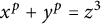 over various number fields using the modular method. First, by assuming some standard modularity conjecture, we prove an asymptotic result for general number fields of narrow class number one satisfying some technical conditions. Second, we show that there is an explicit bound such that the equation
 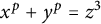 does not have a particular type of solution over
 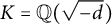 , where
  whenever p is bigger than this bound. During the course of the proof, we prove various results about the irreducibility of Galois representations, image of inertia groups, and Bianchi newforms.
The Gelfand–Graev representation of classical groups in terms of Hecke algebras
Let G be a p-adic classical group. The representations in a given Bernstein component can be viewed as modules for the corresponding Hecke algebra—the endomorphism algebra of a pro-generator of the given component. Using Heiermann’s construction of these algebras, we describe the Bernstein components of the Gelfand–Graev representation for  ,
,  , and
, and  .
.
On constructions of nested partially balanced incomplete block designs
.
Singular boundary conditions for Sturm–Liouville operators via perturbation theory
We show that all self-adjoint extensions of semibounded Sturm–Liouville operators with limit-circle endpoint(s) can be obtained via an additive singular form-bounded self-adjoint perturbation of rank equal to the deficiency indices, say  . This characterization generalizes the well-known analog for semibounded Sturm–Liouville operators with regular endpoints. Explicitly, every self-adjoint extension of the minimal operator can be written as where
 is a distinguished self-adjoint extension and
  is a self-adjoint linear relation in
  . The perturbation is singular in the sense that it does not belong to the underlying Hilbert space but is form-bounded with respect to
  , i.e., it belongs to
  , with possible “infinite coupling.” A boundary triple and compatible boundary pair for the symmetric operator are constructed to ensure that the perturbation is well defined and self-adjoint extensions are in a one-to-one correspondence with self-adjoint relations
  .
.
The merging of boundary triples with perturbation theory provides a more holistic view of the operator’s matrix-valued spectral measures: identifying not just the location of the spectrum, but also certain directional information.
As an example, self-adjoint extensions of the classical Jacobi differential equation (which has two limit-circle endpoints) are obtained, and their spectra are analyzed with tools both from the theory of boundary triples and perturbation theory.
Synthetic-type control charts for monitoring general inflated poisson processes
.
Quivers with potentials for Grassmannian cluster algebras
We consider a quiver with potential (QP)  and an iced quiver with potential (IQP)
  associated with a Postnikov Diagram D and prove that their mutations are compatible with the geometric exchanges of D. This ensures that we may define a QP
  and an IQP
  for a Grassmannian cluster algebra up to mutation equivalence. It shows that
  is always rigid (thus nondegenerate) and Jacobi-finite. Moreover, in fact, we show that it is the unique nondegenerate (thus rigid) QP by using a general result of Geiß, Labardini-Fragoso, and Schröer (2016, Advances in Mathematics 290, 364–452).
Then we show that, within the mutation class of the QP for a Grassmannian cluster algebra, the quivers determine the potentials up to right equivalence. As an application, we verify that the auto-equivalence group of the generalized cluster category  is isomorphic to the cluster automorphism group of the associated Grassmannian cluster algebra
  with trivial coefficients.
Nonparametric scale tests based on the notion of data depth
.